
Global Smartphones Market Overview
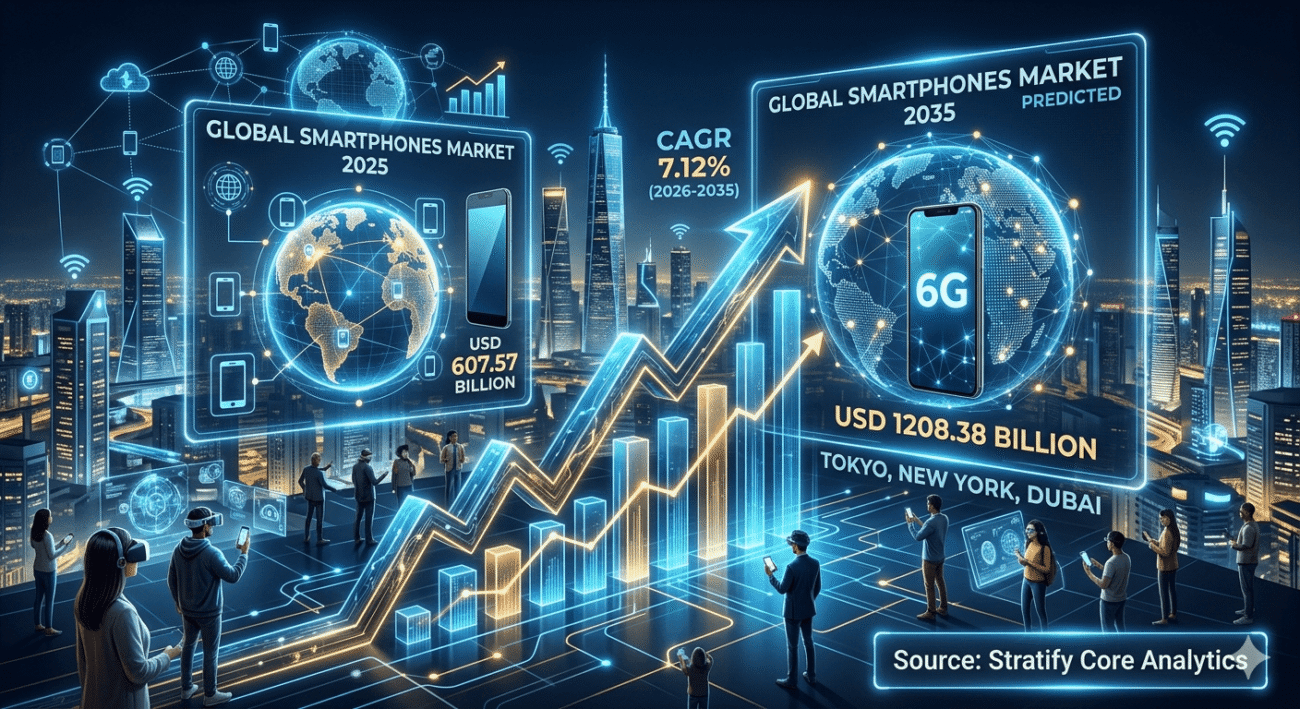
The Global Smartphones Market size accounted at USD 607.57 Billion in 2025 and is predicted to reach around USD 1208.38 Billion by 2035, growing at a CAGR of 7.12% from 2026 to 2035.
The global smartphones market has evolved and grown as one of the most competitive and fast-paced industries in the consumer electronics sector. Smartphones have become an integral part of human existence as multifunctional devices serving a variety of purposes apart from being communication tools. These purposes include entertaining users, supporting business activities, and promoting education, healthcare services, and digital payments. Widespread adoption of internet services and development of mobile technology and escalating consumer demand for interconnected mobile devices further bolster the expansion of the global smartphones market in both developed and developing countries.
Over the last decade, technological changes have brought about massive transformations for smartphones. Brands are consistently adopting new technologies and innovating new features like superior cameras, foldable displays, AI integration, higher refresh rate screens, 5G capability, superior battery capacity, and many other features that can appeal to consumers. These advancements have led to a higher penetration rate of smartphones amongst diverse age groups and different income brackets as people increasingly rely on the devices in their daily routines.
The global smartphones market’s growth is heavily driven by the deployment of 5G networks. The shift from 4G to 5G technology is driving the demand for new generation smartphones, which will deliver high internet speed, less latency, and better network connectivity. Consumers are upgrading their existing devices so they can leverage new opportunities and experiences of enhanced streaming, gaming, and communication, whereas organizations are utilizing smartphones in their business activities, teleworking, and cloud computing.
Increasing adoption of mobile applications and digital ecosystems is another reason contributing to the smartphone market growth. The range of services now supported by smartphones, including mobile banking, e-commerce, online learning, telemedicine, social networking, digital entertainment platforms, and many others, has led customers to spend more money on smartphones, which offer better processing power, sufficient memory, and high security.
Asia-Pacific dominates the global smartphone market, owing to its large consumer base, rapid urbanization, and the well-established manufacturing sector in economies such as China, India, South Korea, and Vietnam. China still represents the world’s largest producer and consumer of smartphones, along with several leading smartphone manufacturers based in China, such as Xiaomi, Vivo, Oppo, and Huawei. India’s smartphones market has grown at a faster rate owing to increased disposable incomes, availability of cheaper smartphones, and internet access to rural and urban regions in India.
North America and Europe are mature markets characterized by the strong presence of smartphone users and a high replacement rate. Consumers in these countries prefer devices that have sophisticated technology, with AI integration, foldable form factors, robust security features, and higher processors to support augmented and virtual reality applications.
The global smartphone market is very competitive, with many local and international companies contesting for the dominant position on price, new product development, brand value, and technological capacity. The main manufacturers are investing heavily in R&D in order to enhance their position on the market and release highly competitive and differentiated products. Companies are widening their distribution on the internet and in brick-and-mortar stores in order to cover a wider range of consumers. Collaborations, mergers, acquisitions, and new product launches still play a common role for the market players to retain their competitiveness.
However, there are various concerns about the rapid growth of the smartphone industry. Developed market saturation, volatile component prices, and components availability, increasing environmental issues may lead to a decrease in the global market growth. Also, higher consumer consciousness on E-waste and environmental protection is creating pressure on companies to adopt environmentally conscious practices, to use recycled and durable materials in their devices. Furthermore, governmental bodies and authorities are raising the stakes on guidelines concerning data security, privacy protection, cybersecurity, and environmental standard regulations.
The rise of the second-hand and refurbished smartphones is an additional trend shaping the market. Since affordable products are becoming an increasing priority, certified pre-owned smartphones are becoming widely adopted, especially in price-sensitive regions. The new trend in the smartphone market makes manufacturers and vendors set organized processes of refurbishment and trade-in schemes for the sales.
Secondly, by embracing the technology of AI and Machine Learning, smartphones are also advancing to have improved functionalities and capacity. Voice assistants powered by AI, personalization based on smart learning, intelligent camera technology, as well as smart performance improvement, are all seen in the latest smartphone generations, which are offering better user experience and, as a result, differentiating products from the competition.
In the future, the global smartphone market will witness new changes by the introduction of flexible display technology, integration of AR & VR, and smart connecting technologies, including smart homes and the Internet of Things. The rising need for intelligent and interconnected devices will drive smartphones to provide new opportunities for smart device producers as well as software developers globally. Mobile phones have become indispensable for personal use as well as working, so the market will remain one of the leading industries for the global digital economy in the coming future.
Key Smartphones Market Trends
The smartphones market is a rapidly changing one with the makers focusing on innovation, usage, and superconnectivity. AI, Foldables, sustainability, ultra-fast connectivity, and greater mobile performance are some of the driving forces behind the current smartphone market. Today’s generation does not buy smartphones for calls but want it to serve as the ultimate workstation, entertainment console, as well as an AI personal assistant. Consumer demand like this is leading to a shift in the design and selling of smartphones globally.
The greatest trend that has emerged in the smartphone market is Artificial intelligence. Smartphone companies are working on building AI into phones. The smartphone companies are building AI for better personalization, enhancing the performance of the camera, optimizing the battery, and having intelligent voice assistants. With AI, smartphones can summarize messages, intelligently edit photos, and perform real-time translation and task management. The big companies are investing in more AI processing, which is device-based for faster and more secure processing and less dependent on cloud-based servers. Samsung has already stated that it would extend its AI feature across its all smart phones lineup by the end of 2026.
Foldable smartphones are also another driver of growth in the premium smartphone market. Consumers are becoming more inclined to purchase smartphones that can combine the portability of a smartphone with the productivity of a tablet. Companies such as Samsung, Motorola, Oppo, Huawei, and Vivo are all releasing slimmer, sturdier foldable smartphones with more efficient hinges and reduced screen creases. Industry analysts are predicting a steep rise in the number of foldable smartphones that will be shipped over the next few years as consumer demand grows with new technologies. Counterpoint Research predicts that 2026 will see a huge jump in the number of foldable smartphones being shipped due to demand and the possible entry into the market by Apple.
Another of the trends affecting the smartphone market is the rise of 5G connectivity and preparation for 6G technologies. With 5G connectivity becoming more readily available globally, smartphones are being adapted for faster download speeds, cloud computing, low-latency gaming, and instant streaming. New technologies such as satellite connectivity are also gaining more prominence with their use in remote locations where cellular networks are unavailable. It is predicted that in the next decade, there will be an increase in research toward 6G networks and mobile infrastructure.
Battery technology and super-fast charging have become a key trend in recent years, with a growing demand for smartphones with longer battery lives and enhanced performance as silicon-carbon batteries and charging speeds above 100 W become more common. Some next-gen smartphones are expected to achieve a full charge in a few minutes, whilst not compromising on battery health and safety, as technologies such as AI features and foldable displays demand higher battery capacity than current generations of smartphones.
In addition to those, the production of eco-friendly smartphones and sustainability are emerging as major trends all over the world. Environment-conscious consumers will prefer long-life cycle and repairable smartphones. Manufacturers are responding to this demand by using recycled components, decreasing e-waste, and prolonging the software support period. For example, Fairphone is advocating a modular smartphone that can easily be repaired or upgraded by its owner. Producers also pay a lot of attention in energy efficient manufacturing process and use eco-friendly package material for strengthening its sustainable responsibility.
In the premium segment, leading smartphone makers are putting more resources to advanced camera features. From larger camera sensors, better AI picture enhancement algorithms, higher optical zooming capacity to professional grade video recording feature, smart phone cameras are continually gaining advanced features, consumers would be inclined to produce their own content for social media as well as for mobile filmmaking; therefore they will prefer to use smartphones equipped with better cameras, in the future we may see fold phone have same caliber camera system like flagship smartphones. Given this demand for better cameras, professional filming will be one of the critical reasons in consumers’ smartphone choices globally.
In addition, growing importance of ecosystem is another new trend, leading smartphone brands are working on expanding an interconnected ecosystem linking their smartphones with smartwatches, wireless earphones, tablets, smart home devices and AI based wearable gadgets, thus enabling more connected digital lifestyle to user and reinforce brand loyalty, the future trend of AI smart glasses or any kinds of smart wearables will only complement smartphones instead of replacing it, thereby expanding a wider mobile ecosystem.
The smartphone market is undergoing a revolutionary transformation through technology, interconnectivity, and new consumer desires. We believe the combination of artificial intelligence, foldable devices, greener manufacturing and sustainability, and enhanced connectivity and mobile ecosystems will fundamentally alter the market. With continued advancement in technology, we believe manufacturers will shift toward building “smarter, faster, more personal experiences” to satisfy all consumers.
Smartphones Market Key Restraints
The global smartphones market has seen significant growth over the last decade, driven by technological advancements, increasing internet penetration, and increased dependency on connectivity devices among consumers. The smartphones are essential in consumer daily lives as they facilitate performing various functions, right from communication, entertainment, to online shopping, online banking, and remote working. Though the market has observed a rapid growth, there are several factors that have restrained the growth in the market, which affect both the manufacturers, suppliers, and retailers, along with the consumer at large. Here is a breakdown of these restraints that need to be addressed for understanding the mobile devices market.
Increasing market saturation in developed countries: The US, Japan, South Korea, and a few countries in Europe have high penetration rates for smartphones. As the majority of the people in these countries are already holding smartphones they are not many potential new customers, thus mobile companies depend upon the replacement of devices. This leads to intense competition among companies to gain new users, which not only is a challenge to growth but is also an increasing threat to manufacturers. Additionally, with improved durability and higher functioning features of new smartphones, consumers hold onto their mobile phones for a longer duration, which also limits market growth, as there is no urgency to upgrade them.
Rising cost of smartphones: The price of the flagship models is going high day-by-day with each newly launched gadget, with additional technology like foldable screens, AI features, advanced processors, and hi-tech cameras in the mobile phone. This makes these premium gadgets not in range of the average consumer, particularly in emerging nations. The high prices of the devices result in customers delaying buying new smartphones or opting for budget and refurbished devices, which limits profit to the manufacturer.
Disruption in the supply chain is another critical challenge to the smartphones market. A complex and interconnected global supply chain network involving the manufacturers of semiconductors, display units, battery cells, and logistic services is crucial for the Smartphone market. Geopolitical crises, trade wars, natural calamities, and pandemics can severely disrupt this network. As was evident recently, a chip shortage affected smartphone manufacturers, leading to increased delays in production and a shortage of smartphones in various markets, which eventually increases the operational costs and reduces profit margins.
Increased concern about electronic waste associated with smartphone production is a deterrent to market growth. The smartphones consist of various rare-earth elements, metals, and chemicals, which are harmful to the environment if not handled properly. The fast replacement cycle in the smartphone market has also led to the massive accumulation of e-waste in the global context. Environmentalists and government bodies are coming up with stringent regulations on e-waste, sustainability, and carbon emissions. Compliance with such regulations can be quite costly for the manufacturers, and consumers are also getting conscious about the environment, leading to a lower frequency of purchase and a longer replacement cycle for their devices.
The high degree of competition within the Smartphone market poses another limitation to profitability and market growth. Global and local players are aggressively competing on features, pricing, and innovation with each other. Brands launch new products very frequently, decreasing the product life cycle and escalating R&D expenditures. Smaller players have an edge to challenge established companies that already have strong brand equity, distribution network, and huge R&D budget. Price war and cost-cutting strategies, particularly in the budget and mid-range smartphones, are shrinking profit margins.
Cybersecurity and data privacy issues have posed significant constraints in the smartphone market. Consumers are concerned about hacking, malware, and unauthorized access to personal and financial information as smartphones save a tremendous amount of this data. Data breaches and privacy infringement experiences may erode consumer trust and consequently impact purchase decisions. Smartphone manufacturers and software companies must allocate more investment in security upgrades, encryption technologies, and data privacy protection measures to cope with these concerns. In contrast, maintaining reliable cybersecurity requires high operating costs and sophisticated technology.
The reliance on fast-changing technologies and customer demands is another major constraint. Customers always ask for better battery life, higher speed processor, advanced cameras, etc. To be embedded in smartphones. These demands require continuous investment in research, development, innovation, and product development. Failure to catch up with the technological trend will cause firms to lose market competitiveness. Nevertheless, fast technological development can also shorten the product lifecycle, raising the development cost and the number of product launches per year despite incremental innovation.
Economic uncertainty and fluctuation in consumer purchasing power also impact the smartphone market. When the economy goes down, prices increase, and unemployment goes up, customers would cut down on discretionary spending rather than essential things like new smartphones. Lower sales will thus be seen in price-sensitive markets, and there can be a reduction in revenue from it. The fluctuation of exchange rates and import taxes in many countries also contributes to increasing the price of smartphones and reducing the affordability among lower-income consumers.
Therefore, although the smartphone market continues to grow and flourish across the globe, there are several limitations faced in this market that pose as an impediment to further growth in the market. The saturation of the market, the increasing prices of the devices, the disturbance in the supply chain, environmental concerns, security and safety issues, and the presence of intense competition have to be taken into consideration in the growth of the smartphone market. Moreover, behavioral changes of consumers and economic instability have further complicated the market conditions. In order to gain and increase growth in the long run, all the stakeholders in the market have to concentrate on innovation, the affordability of the products, the eco-friendliness of the devices, the customer confidence, and the changing dynamics of the market.
Smartphones Market Key Opportunities
The worldwide smartphones market is continuously evolving, characterized by continuous technological development, customer choices, and an expanding digital ecology. Now in the world and in each individual’s life, smartphones are no longer just phones but essential elements. Because the market can bring about considerable business opportunities to each manufacturer of manufacturing, software dealer, telecommunications operator, component maker, etc. In the developed and emerging markets. On one hand, the popularity of internet service and demand for smart gadgets have already made the smartphones market not only competitive but also full of it; furthermore, it seems like the intelligence factor, like artificial intelligence (AI), is becoming important too.
The biggest opportunity in smartphones market comes from 5G applications. Along with 5G networks across the world rolling out in several countries and regions, and the desire from consumers to adopt to faster speeds, lower latency, and better connections, many brands have recently started to produce mid-range and entry-level 5G smartphones, to provide them to customers at an affordable price and to push up replacement cycles and overall market volume. And for the industries such as playing games, cloud computing and streaming video, etc., which can be profoundly improved through faster speed and lower latency.
The other great opportunity for the smartphones market comes from developing nations. More developing nations, especially those of Asia-Pacific, Latin America, and Africa, with the increasing disposable income, the fast pace of urbanization, better telecom network coverage, and people are increasingly purchasing smartphones, and for these first-time mobile customers in those areas, there exist huge opportunities for those smartphone vendors to get more clients with both low prices and reasonable functions. By means of locale-specific advertisement, regional language support, and cost-effective service, those sellers try hard to expand their customer segment.
The rising trend of artificial intelligence and machine learning in smartphones has led to great market opportunities. AI features in smartphones, like intelligent voice assistants, facial recognition, and content suggestions, smart camera features etc, becoming a competitive advantage for smartphone makers. Consumers are attracting to smarter photo capturing, better battery usage, and a predictable and helpful user experience. The new innovative products from smartphone manufacturers in the coming years would likely take advantage of enhanced AI capabilities to offer ultimate convenience, improved productivity, and exciting entertainment.
The advent of foldable and flexible display smartphones offers new possibilities to smartphone manufacturers. Consumers’ growing desire for high-quality, portable phones that offer large screens has fueled up new demands in the market. Foldable smartphones not only offer improved multitasking experiences, exciting game playing, and immersive content consumption but also provide more flexibility in terms of viewing preferences. Although foldable smartphones are now primarily for premium segments, with new technology, cost savings are expected to provide broader adoption in a few years.
The surge of mobile gaming and digital entertainment is another market opportunity for smartphone companies. Many people now play games, watch movies, use social media, or play augmented reality apps through their smartphones. Hence, customers are seeking high-performance mobile phones with great processor power, rapid displays, great graphics capabilities, and efficient battery power. Many young people, as well as professional gamers, prefer gaming-oriented and multimedia-specialized mobile phones.
The increasing proliferation of e-commerce also presents new opportunities in the smartphone sector. Manufacturers can take advantage of the widespread online presence by offering more reach with reduced distribution costs to consumers. The benefits for the customers lie in an increased ability to compare products with ease, available discounts, and the comfort of ordering through simple online purchasing models. The growing tendency to collaborate with e-commerce platforms, enabling brands to sell online exclusive models and run flash sale models, is also providing smartphone makers a way to enhance market reach and consumer engagement. The proliferation of digital payment systems and the availability of online credit or finance options are helping consumers throughout the world make purchases of smartphones.
Sustainability and green smartphone manufacturing are also presenting new and considerable opportunities to companies looking for long-term business growth. Consumers are gradually growing more environmentally conscious and are looking for brands that offer recycling capabilities, use eco-friendly materials in manufacturing and packaging, and have an energy-efficient production process. Manufacturers are slowly increasing their focus on bringing down carbon emissions throughout the entire life cycle of a smartphone and promoting products with better life spans and options for trade-ins and recycling. Brands that are on top of the sustainability trend have the chance of gaining increased loyalty and a competitive advantage.
The further integration of smartphones with the Internet of Things ecosystem also presents a significant opportunity for companies in the sector. Smartphones are steadily being developed and used as control systems for smart home appliances, wearables, connected vehicles, and the like; thus, they stand to gain demand for being a part of smart ecosystems, making them desirable as central control units with superior interconnectivity features. This also presents ample opportunities for software, app, and hardware developers to capitalize on this new wave of innovation and devise new solutions that may further benefit the users and add to the utility of their smartphone devices.
The increasing usage of mobile banking, digital wallets, and online education is also spurring the demand for smartphones globally. Smartphones have become an indispensable part of human life, the main means of communication, transaction, working remotely, and virtual learning. The trend that has become more pronounced during and after the pandemic, when customers were more dependent on their mobile phones for everyday tasks, is expected to continue. The ubiquitous presence of mobile devices is expected to keep the demand for smartphones high as long as the digital transformation continues across sectors.
All in all, the smartphone market presents great growth prospects driven by rapid innovation in technology, wider connectivity, the inclusion of artificial intelligence, emerging market growth, and changing consumer preferences toward an increasingly digital lifestyle. Enterprises focusing on the factors of affordable price, innovation, sustainability, and enhanced user experience are poised to benefit from sustained growth in the intensely competitive industry.
Smartphones Market Key Drivers
Over the past 10 years, the smartphones market has shown astonishing growth, becoming one of the most energetic and competitive markets in the world. From a device that was once a simple calling and messaging device, the smartphone has transformed into a multifaceted gadget that can facilitate internet access, entertainment, shopping, online payments, social networking, and work. Increasing dependency on internet access and smart technology is fueling the expansion of the smartphones market in both developed and developing countries. There are several prominent factors contributing to the growth and increasing demand for smartphones:
One of the dominant factors fueling the smartphones market is rapidly advancing mobile technology. Manufacturers are consistently innovating with features such as powerful processing capabilities, advanced camera functionalities, artificial intelligence integrated into devices, flexible displays, and better battery life. These technological advances are prompting consumers to upgrade devices at increased frequencies. The widespread availability of 5G smartphones is another significant factor in fueling the market as consumers demand higher internet speed and increased network performance for gaming, streaming, and working remotely.
A second dominant factor in expanding the smartphones market is the increasing internet penetration. Expansion in internet infrastructure throughout the globe is driving smartphone penetration, especially in developing countries. Lower-priced data plans and increasing network accessibility allow millions of consumers to obtain access to digital services via smartphone. The need to use the internet for schooling, communication, banking, and online purchasing is encouraging an increase in smartphones.
Social networking sites and digital entertainment applications are also driving the growth of the smartphone market. Users are devoting significant time to applications like video streaming applications, gaming applications, and social networking sites, and these kinds of applications demand high-performance smartphone devices that have larger screens and superior processor efficiency. These demands for improved multimedia consumption are pushing smartphone manufacturers to invest heavily in optimizing screen performance, audio systems, and camera specifications, which has, in turn, fueled consumer demand for premium smartphones.
Increasing disposable income and evolving lifestyle of consumers are other key driver that supports the smartphone market expansion. Rising consumer income in many countries has enabled people to spend on higher-end smartphone models with advanced features and capabilities. Consumers are not treating smartphones as luxury products but as everyday needs. A growing digitalized world across industry sectors is elevating the importance of smartphones both in personal and professional spheres. Consumers are using smartphones for online meetings, working remotely, for fitness applications, navigation, and mobile payment, and so on; all these aspects generate steady demand.
E-commerce is another dominant force that drives the growth of the smartphone market globally. The online channel of sale offers the customer ease of accessibility to a wide variety of smartphone models, competitive pricing, customer reviews, and flexible payment options. The online platform helps the manufacturer reach the customers even in the interior and neglected parts of the country. Seasonal offers, exchange schemes, and flexible payment options have all made smartphones an affordable luxury.
The growing usage of smartphones by young consumers is another major driver. The demographic of mobile users is shifting towards the young segment (millennials and generation Z) who are tech-savvy and desire Smartphones that are well-equipped with advanced gaming, photography, and social media features. Manufacturers are coming up with feature-rich Smartphones specifically for the younger generation. Additionally, educational institutions and various businesses are also widely using Smartphones for communication and to conduct online courses, thus supporting the growth of this market.
Integration with emerging technologies such as the Internet of Things, Cloud Computing, and Artificial Intelligence is creating new growth areas in the market. Smartphones are evolving from mere mobile devices into controlling units for smart homes, wearable technology, and connected cars. Consumers are in demand of devices that can smoothly integrate with other digital environments. This is helping manufacturers to invest more in R&D of more intelligent and integrated Smartphones with better security and functionality.
Another growth booster is the growing focus of various governments on digital transformation, smart cities, etc. Governments are investing in expanding digital infrastructure and promoting cashless payments. This is ultimately fueling the demand for Smartphones in order to be a part of the digital economy and to access the services that are being made digitally available. In underdeveloped regions, government-funded initiatives to eradicate the digital divide are supporting the smartphone market to expand.
The intense competition within the smartphones market is another key driver of the market’s growth. The major manufacturers are in a constant battle for dominance, and this means there are always new and exciting products entering the market with competing prices, innovative technology, and frequent updates and launches. The market’s competitors ensure that there is now a vast range of different phones available at varying price levels, which the consumer can access, and these include highly advanced smartphones, which, now, even in budget varieties, are affordable to people in less developed countries.
The smartphones market is being driven by technological innovation, expanding internet coverage, changes in lifestyle, increased disposable income, and a rising awareness of the benefits of digital connectivity. An expansion in the number of 5 G-enabled smartphones, along with the increase in use of digital entertainment and applications for the new smartphones, is also expected to add to the already rapidly growing market. A constantly increasing number of people all around the world, whether for productivity or leisure, rely on and require a smartphone, and therefore, the market for smartphones is not only growing at an exponential rate.
Smartphones Market Segment Insights
Over the past ten years, there has been an enormous growth in the global smartphone market. It has been largely driven by fast-developing technology, rapidly increasing internet penetration rates, and rising global demand for smart digital devices. From a tool of communication, a smartphone has become an integrated multifunctional device providing support for the usage of entertainment, productivity, social networking, e-commerce, and digital payments, etc. Market segmentation of smartphones mainly includes operating system, price range, distribution channels, and end-user, which have significantly contributed to the overall global smartphone market.
Based on the operating system segment. The smartphones market is mainly segmented based on two main operating systems-Android and iOS platforms. It appears that Android mobile devices have the largest market share among the smartphones market across the world because Android smartphones are much more affordable than iOS phones, and there are massive applications support with android phones. Android devices are produced by brands such as Samsung, Xiaomi, Oppo, Vivo, OnePlus, etc. They appeal to users with all ranges of budget, from the low price and the mid price segment users to the premium price segment users. In contrast to Android, iOS mobile devices, owned by Apple, dominate the market of the premium segment of smartphones around developed markets, including North America and the European region, because the high performance on interface experience and the strong feature on security protection as well as superior design. IPhones appeal to users in terms of its fully-integrated ecosystem and excellent security performance, and they offer the best design in smartphones available today. Between Android and iOS, it is always considered to be a tight contest that leads both giants to upgrade and improve their products.
Based on the price range segment. The smartphone market has generally been segmented by budget smartphones, mid-range smartphones, and premium smartphones. The budget smartphones make up a big share of the smartphones in emerging countries like India, Brazil, Indonesia, and African countries. The users in these markets prioritize a phone to be affordable, to have strong battery performance, and acceptable working performance. Manufacturers try to supply affordable mobile phones to customers in the budget price segment. These kinds of smartphones feature satisfactory camera quality, large screen size, and acceptable internet connectivity, which is at least available to connect 4G networks. The mid-range smartphone segment has developed quickly due to the increasing global consumer demand for better features and good performance at a relatively mid-range price. Currently, the mid-range smartphones feature high display refresh rate, multiple camera lenses, outstanding chipsets performance, and high-speed charging capability, thereby narrowing the gap between budget smartphones and premium ones.
The high-end segment of the smartphone market has been consistently growing owing to increasing purchasing power of the consumers, technological advancements, and Brand image factor of the consumers. The devices that fall under the high-end segment are flagship devices, which usually sport features like higher camera resolution, integration of Artificial Intelligence (AI), foldable displays, faster processors, better security, etc. The leading manufacturers are Apple and Samsung, followed by numerous brands increasingly entering the high-end segment with competitive specifications at much lower prices and higher competition. The devices with foldable displays and Artificial Intelligence are expected to boost the high-end market segment in the upcoming years.
One other classification based on the distribution channel, which consists of online and offline markets, can be seen. Online markets have become the most sought-after channel due to the massive growth in the E-commerce industry and the increased interest of consumers in digital buying. Online distribution channels offer customers more choice of products at a reasonable price, ease in making purchases through an e-commerce website/app, customer feedback for each product, and the option of flexible payment. Through initiatives such as Flash sales, Festive offers, etc, smartphone companies have been able to witness massive growth in their sales over the online channels. Offline distribution channel stores continue to hold significance for those who like to experience the product before it is purchased. The offline market offers customers personal interaction and hands-on experience, which are crucial while making purchase decisions.
Based on geographical segmentation of the market, the Asia Pacific has gained the maximum market share in the smartphones market owing to a huge consumer base, the rise of middle-class consumers, and also due to the presence of a robust manufacturing base. China has led in terms of smartphone manufacturing, while in terms of consumption, China and India have played vital roles and continue to do so. India is the fastest-growing smartphone market due to increased digital penetration and cheap data access. North America and Europe have a well-established market in terms of consumer electronics, and hence, a significant demand for high-end products can be noticed in these two regions. Latin America, the Middle East, and Africa are currently gaining significant traction as more and more people are purchasing smartphones owing to increasing internet accessibility and low pricing.
The advancement in technology is also contributing to the segmentation of the smartphone market. A recent key differentiator in this market is the emergence of 5G technology. In most parts of the world, 5G is a key contributor to the upgrade cycle of smartphones globally, as many users desire high-speed data connections, reduced lag in applications, and improved experiences when streaming and gaming. Furthermore, a number of high-tech factors such as artificial intelligence, augmented reality, machine learning, and the latest in mobile camera technologies are defining differences between different models and brands. Beyond tech features, consumers are placing a growing emphasis on sustainability and environmentally friendly production.
The global market is very competitive, and it is dominated by a few large technology giants along with various emerging companies that keep on innovating in this market sector. Significant amounts are being spent on research and development in the smartphones market to boost device efficiency, better integrate the OS with the device, improve battery efficiency, and improve user interface/ experience. It can be noted that mergers and acquisitions, partnerships, and regional expansions are all contributing factors that increase competitive pressure.
Overall, the smartphones market shows significant potential for future growth across all sectors and markets. Technological innovation, digital transformation, increased internet accessibility, and consumer demands are all expected to boost sales over the next few years. Smartphone companies will have to pay close attention to cost-effectiveness, advanced features, consumer demands related to sustainability, and the ultimate user experience if they are to succeed in the competitive global smartphones market.
Smartphones Market Regional Analysis
The world smartphone market has constantly developed and growing day by day thanks to technological progress, rising internet access rate, rising disposable income and the strong demand for high-end devices by users. Each region contributes to the overall smartphone market in its own way, and growth drivers. Asia-Pacific, North America, Europe, Latin America, and the Middle East & Africa have different growth patterns in global smartphone market. According to different research firms, global smartphone shipments observed a moderate growth in 2025 due to growing demand of AI smart phones, widespread usage of 5G services and upgrade cycle in developing economies.
Asia-Pacific is the world’s largest smartphone market both in terms of shipments and revenue worldwide. Countries like China, India, South Korea, and Japan have been manufacturing centers as well as high consumption markets. This market benefits from the large population, increasing affordability of smartphones, and aggressive digital transformation policies. The Chinese market is regarded as one of the leading smartphone markets in the world, as it houses top-notch smartphone companies such as Xiaomi, Huawei, Oppo, and Vivo. The Indian market has become one of the fastest-growing smartphone markets thanks to affordable 5G devices, widening internet coverage, and improving median income levels. Rising rates of e-commerce and the government’s push towards domestic manufacturing strengthen the position of the market. In 2025, the region captured more than 42% of the revenue of the world smartphone market.
The North American region constitutes a mature and profitable smartphone market where there is high demand for high-end smartphones and new technologies. The US market is the largest contributor in this region because of its increased consumer purchasing capacity and mass adoption of flagship Smartphones. Apple dominates this region with sustained customer support, a robust ecosystem, and ongoing innovation in AI-embedded functionalities and security features. In the North American region, consumers prefer high-end smartphones that have the best cameras, foldable screens, and AI technologies embedded in them. The ongoing deployment of 5G networks and increasing demand for enterprise mobility is also driving the market growth in North America. While market saturation and long replacement cycles may limit overall shipment growth, the North American region provides higher revenue.
The European region is another important region for the global smartphone market due to the demand for sustainable, premium mobile devices. Major contributors in this region are Germany, the UK, France, and Italy. European consumers prioritize the need for smartphones that have the best security features and longer software updates, along with being environmentally friendly and produced using sustainable manufacturing methods. In addition, the growing market for refurbished smartphones has increased in this region owing to increasing consumer awareness and conscious purchase behaviors. Samsung and Apple hold most of the market share, while the Chinese manufacturers are constantly expanding their business by providing a wide range of smartphones with exciting features at affordable prices. The expansion of 5G networks, along with increased consumption of AI-incorporated applications, shall pose further opportunities in Europe.
The smartphone market is growing steadily across Latin America, driven by mobile internet penetration and improving economic conditions. Brazil and Mexico are the dominant smartphone markets and account for a considerable portion of the sales in Latin America. The consumers in Latin America tend to choose affordable and mid-range smartphones due to price-conscious behavior. Chinese manufacturers of smartphones have also captured a large portion of sales in Latin America due to their aggressive pricing strategies and diversified product portfolios. The rising digital payment platforms, online education, and online entertainment are pushing young customers to adopt smartphones in Latin America. Economic instability, inflation, and import barriers in countries of Latin America are some of the key factors challenging market growth. There are abundant opportunities for smartphone vendors in Latin America for budget consumers.
The Middle East and Africa (MEA) is expected to be the fastest-growing market with one of the highest CAGRs in the coming years. Driven by rapid urbanization, increasing internet penetration, and first-time smartphone users is the key driver of demand for smartphones in MEA. The UAE, Saudi Arabia, South Africa, and Nigeria are experiencing a rapid digital transformation, creating more demand for smartphones. Android smartphones dominate in the MEA region, with price sensitivity being a key factor, and also due to the increasing number of first-time users in the developing parts of MEA. Smart city initiatives, support for digital inclusion from the government, and technological advancements are further driving the smartphones market in the MEA region. Double-digit growth of shipments was recorded in MEA and Africa during the recent years, which is largely driven by demand for affordable and low-cost 5G smartphones.
Region-specific trends of the smartphones market exhibit diverse states of maturity, growth potential, and consumer behavior. While premiumization and innovation are a major focus for the smartphones market in developed regions like North America and Europe, affordability and first-time adoption remain the key drivers for smartphone market growth in emerging regions like APAC, Latin America, and the MEA region. AI integration, 5G connectivity, foldable technologies, sustainable devices, and innovation are expected to drive future regional market trends. In the present world of cut-throat competition, local consumer preferences and behavior should be considered by global smartphone manufacturers to sustain in the market.
Top Key Players Operating in the Smartphones Market
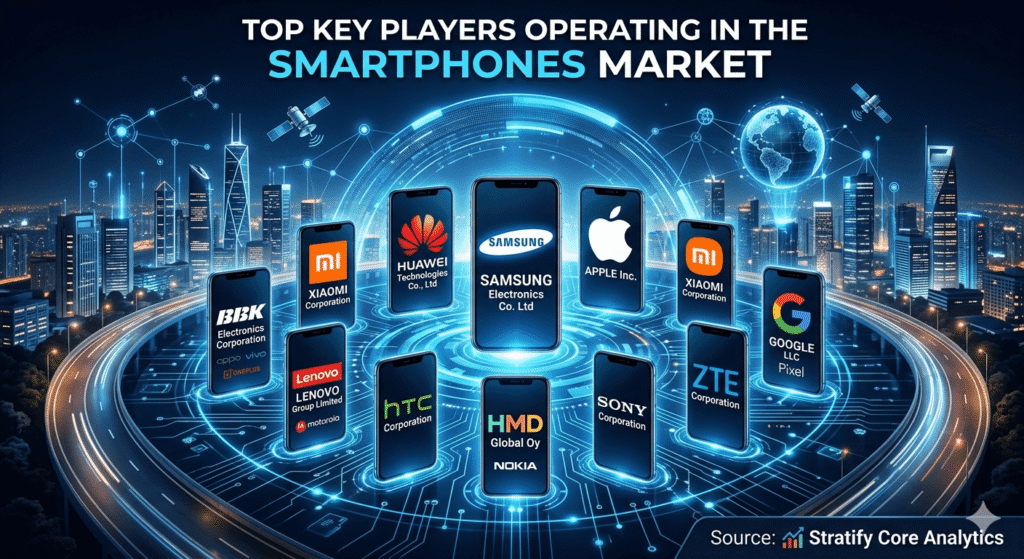
- Samsung Electronics Co. Ltd
- Huawei Technologies Co., Ltd
- Apple Inc.
- Xiaomi Corporation
- BBK Electronics Corporation
- Lenovo Group Limited
- HTC Corporation
- HMD Global Oy
- Sony Corporation
- ZTE Corporation
- Google LLC
The global smartphone market is highly competitive and driven by rapid technological advancements, innovation, and changing consumer preferences. Several multinational corporations dominate the industry by offering advanced smartphones equipped with cutting-edge features such as artificial intelligence, high-resolution cameras, foldable displays, 5G connectivity, and powerful processors. These companies continuously invest in research and development to strengthen their market position and expand their customer base worldwide. Below are some of the top key players operating in the smartphones market.
Samsung Electronics Co. Ltd
Samsung Electronics is one of the leading smartphone manufacturers in the world. The company offers a wide range of smartphones under its Galaxy series, including premium flagship models, foldable phones, and budget-friendly devices. Samsung is known for introducing innovative technologies such as AMOLED displays, advanced camera systems, and foldable smartphone designs. Its strong global distribution network and extensive product portfolio have helped the company maintain a significant market share in both developed and emerging markets.
Huawei Technologies Co. Ltd
Huawei Technologies has established itself as a major player in the global smartphone market. The company gained popularity through its high-performance smartphones featuring advanced camera technology and powerful processors. Huawei’s flagship smartphone series has been recognized for innovation in photography and 5G technology. Despite facing challenges in certain international markets, the company continues to expand its presence in Asia and other regions through technological advancements and strategic partnerships.
Apple Inc.
Apple is among the most influential companies in the smartphone industry. The company’s iPhone lineup is known for premium quality, advanced security features, seamless ecosystem integration, and user-friendly interface. Apple consistently introduces innovative technologies, including powerful chipsets, enhanced privacy features, and high-end camera systems. The company enjoys strong brand loyalty and maintains a dominant position in the premium smartphone segment worldwide.
Xiaomi Corporation
Xiaomi has rapidly emerged as a leading smartphone manufacturer by offering feature-rich devices at competitive prices. The company’s smartphones are popular among budget-conscious consumers as well as technology enthusiasts. Xiaomi focuses on delivering high-performance processors, large batteries, fast charging technologies, and advanced camera features. Its strong online sales strategy and expanding retail presence have contributed significantly to its global growth.
BBK Electronics Corporation
BBK Electronics is a major player in the smartphone market through its subsidiaries such as Oppo, Vivo, OnePlus, and Realme. These brands cater to different consumer segments, ranging from affordable smartphones to premium flagship devices. BBK Electronics has gained substantial market share by focusing on innovative designs, camera technologies, fast-charging capabilities, and aggressive marketing strategies across Asia, Europe, and other regions.
Lenovo Group Limited
Lenovo operates in the smartphone market through its Motorola brand and other mobile device offerings. The company focuses on providing affordable and mid-range smartphones with reliable performance and durable designs. Lenovo has strengthened its smartphone business by integrating innovative technologies and expanding its market reach in developing economies.
HTC Corporation
HTC was once considered a pioneer in the smartphone industry. The company gained recognition for introducing innovative Android smartphones with sleek designs and advanced user interfaces. Although its market share has declined over the years, HTC continues to operate in niche markets by focusing on premium smartphones, virtual reality technologies, and innovative mobile solutions.
HMD Global Oy
HMD Global is known for manufacturing smartphones under the Nokia brand. The company focuses on providing durable smartphones with clean Android experiences and regular software updates. HMD Global has successfully leveraged Nokia’s strong brand reputation to establish a presence in both entry-level and mid-range smartphone segments across global markets.
Sony Corporation
Sony continues to maintain its presence in the smartphone market through its Xperia series. Sony smartphones are recognized for their premium display technologies, professional-grade camera features, and entertainment-focused capabilities. The company leverages its expertise in imaging, gaming, and multimedia technologies to attract consumers seeking high-quality mobile experiences.
ZTE Corporation
ZTE is an important participant in the smartphone market, particularly in Asia and emerging economies. The company offers a variety of smartphones featuring competitive specifications at affordable prices. ZTE focuses on integrating 5G connectivity, AI-powered features, and advanced mobile technologies into its devices to enhance user experiences.
Google LLC
Google has strengthened its position in the smartphone industry with its Pixel smartphone series. Google smartphones are known for delivering pure Android experiences, exceptional camera performance, and seamless integration with Google services. The company also focuses heavily on artificial intelligence, software optimization, and advanced computational photography, making its devices highly competitive in the premium smartphone market.
The smartphone market remains highly dynamic, with these key players continuously competing through innovation, strategic partnerships, product diversification, and technological advancements. Increasing demand for 5G smartphones, AI-enabled devices, and foldable technology is expected to further intensify competition among these companies in the coming years.
Smartphones Market FAQ
1. What is driving the growth of the smartphones market?
The smartphones market is primarily driven by increasing internet penetration, rising adoption of 5G technology, growing demand for advanced mobile applications, and continuous innovations in camera, battery, and processor technologies.
2. Which region dominates the global smartphones market?
Asia-Pacific dominates the global smartphones market due to its large consumer base, expanding middle-class population, and strong presence of major smartphone manufacturers in countries such as China, India, and South Korea.
3. What are the latest trends in the smartphones market?
Key trends in the smartphones market include foldable smartphones, AI-powered features, enhanced mobile gaming capabilities, eco-friendly smartphone production, and increased integration of IoT and smart devices.
4. Who are the major players in the smartphones market?
Major companies operating in the smartphones market include Samsung Electronics Co. Ltd, Huawei Technologies Co., Ltd, Apple Inc., Xiaomi Corporation, BBK Electronics Corporation, Lenovo Group Limited, HTC Corporation, HMD Global Oy, Sony Corporation, ZTE Corporation, Google LLC, all of which compete through innovation, pricing strategies, and technological advancements.
